A Living Heritage of Sasak Culture Woven Through Every Thread
In Bonjeruk Village, Central Lombok, traditional culture continues to thrive as part of everyday life. One of the most important cultural heritages of the Sasak community is nyesek, a traditional handweaving practice passed down through generations, especially among women in the village.
More than just a craft, nyesek represents identity, patience, creativity, and the deep cultural values of the Sasak people. Through every woven fabric, stories of life, nature, and tradition are carefully preserved and expressed in a form that is both functional and artistic. The woven patterns reflect the community’s worldview, social values, and cultural wisdom, making each piece a meaningful representation of Sasak heritage.
The Weaving Process: A Tradition of Patience and Precision
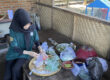
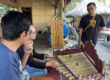
Nyesek is carried out using traditional weaving tools, where threads are manually arranged to form intricate patterns. The process requires high concentration, patience, and skill, making it a craft that cannot be rushed.
In Bonjeruk and surrounding areas, weaving is often learned from an early age within families. Mothers and grandmothers play an important role in teaching younger generations, ensuring that the knowledge of weaving continues to be passed down naturally through daily life. The rhythmic movement of the loom, the careful alignment of threads, and the slow transformation of yarn into fabric create a calming yet deeply meaningful process that reflects harmony between humans, tradition, and creativity.
Meaning Behind the Woven Patterns
Each woven fabric produced through nyesek carries its own meaning. The motifs are not created randomly but are inspired by nature, social life, and the philosophical values of the Sasak community.
Traditional patterns often symbolize identity, social values, and cultural wisdom. Some designs are used for ceremonial purposes, while others are intended for daily use. This diversity shows how weaving is deeply integrated into both cultural expression and everyday life. Through these patterns, the Sasak people preserve their worldview and cultural memory in a form that can be seen, worn, and passed on.
The Role of Women in Preserving Tradition
In Bonjeruk Village, women play a central role in keeping the tradition of nyesek alive. They are not only craftswomen but also cultural custodians who preserve knowledge and pass it on to the next generation.
Weaving is often done at home, creating a space where learning, storytelling, and cultural transmission happen naturally. Young girls observe and gradually learn the technique, ensuring that the tradition remains alive despite modernization and changing lifestyles. For many families, weaving also contributes to household income, making it both a cultural heritage and an important part of the local economy.
From Traditional Craft to Cultural Experience
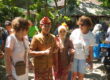
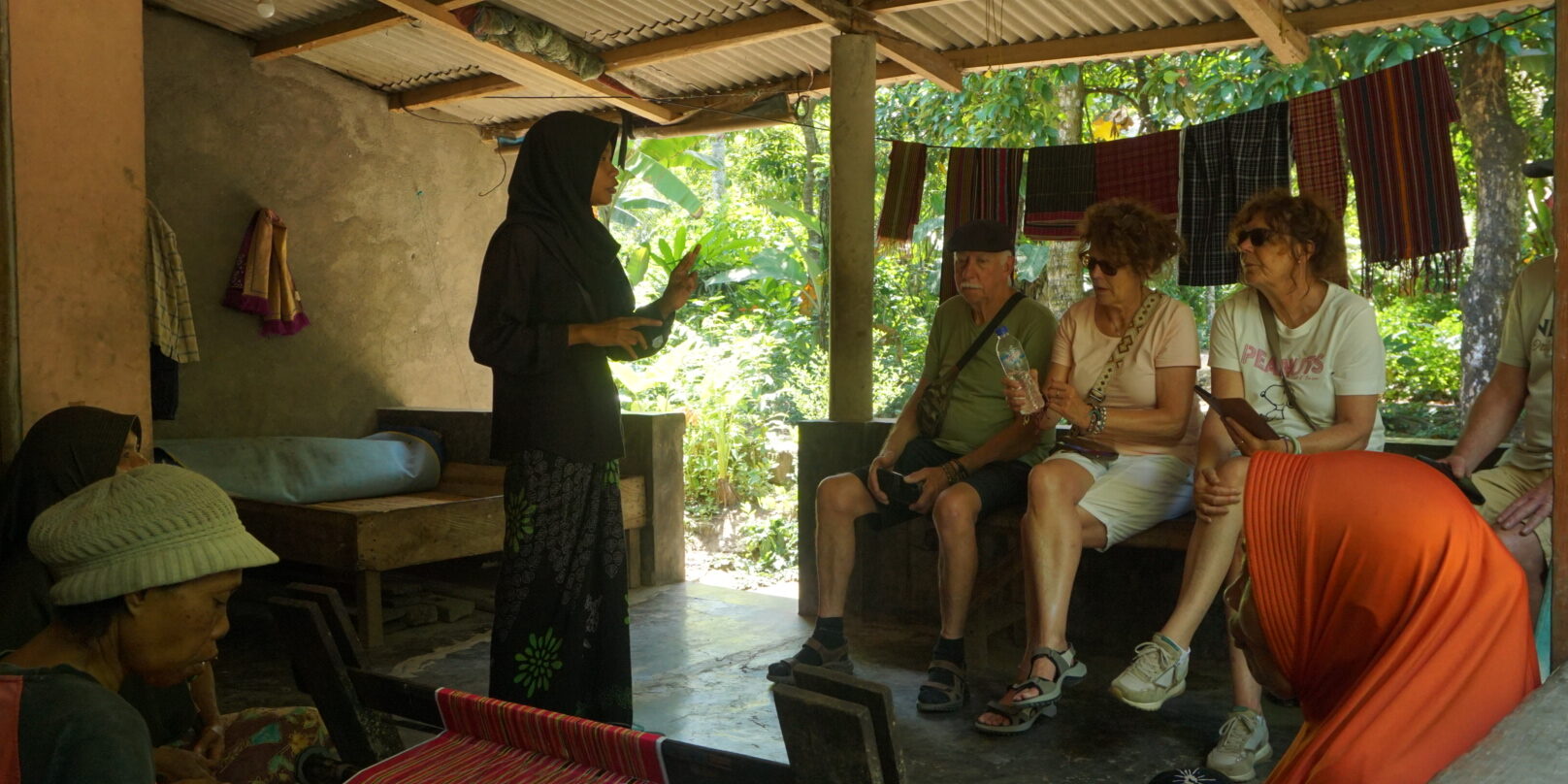
As Bonjeruk develops as a cultural tourism village, nyesek has become part of the cultural experiences offered to visitors. Tourists are welcomed to observe the weaving process directly, learn about traditional tools, and understand the meaning behind each pattern. This interaction allows visitors to experience culture not only as something to observe, but as something lived and practiced by the community every day. Through cultural tourism, nyesek becomes a bridge between heritage and sustainability, ensuring that traditional knowledge continues to be valued and preserved.
For the people of Bonjeruk, nyesek is more than just weaving fabric. It is a living identity, a cultural memory, and a symbol of resilience that connects the past with the present. As long as the loom continues to move in the homes of Bonjeruk, the story of Sasak heritage will continue to live on woven thread by thread, generation by generation.